
How Valuable Nickels Build Long-Term Collector Interest
Stability often defines the most respected coins.
The valuable nickels pieces issued by the United States represent a market segment possessing predictable price movement dynamics.
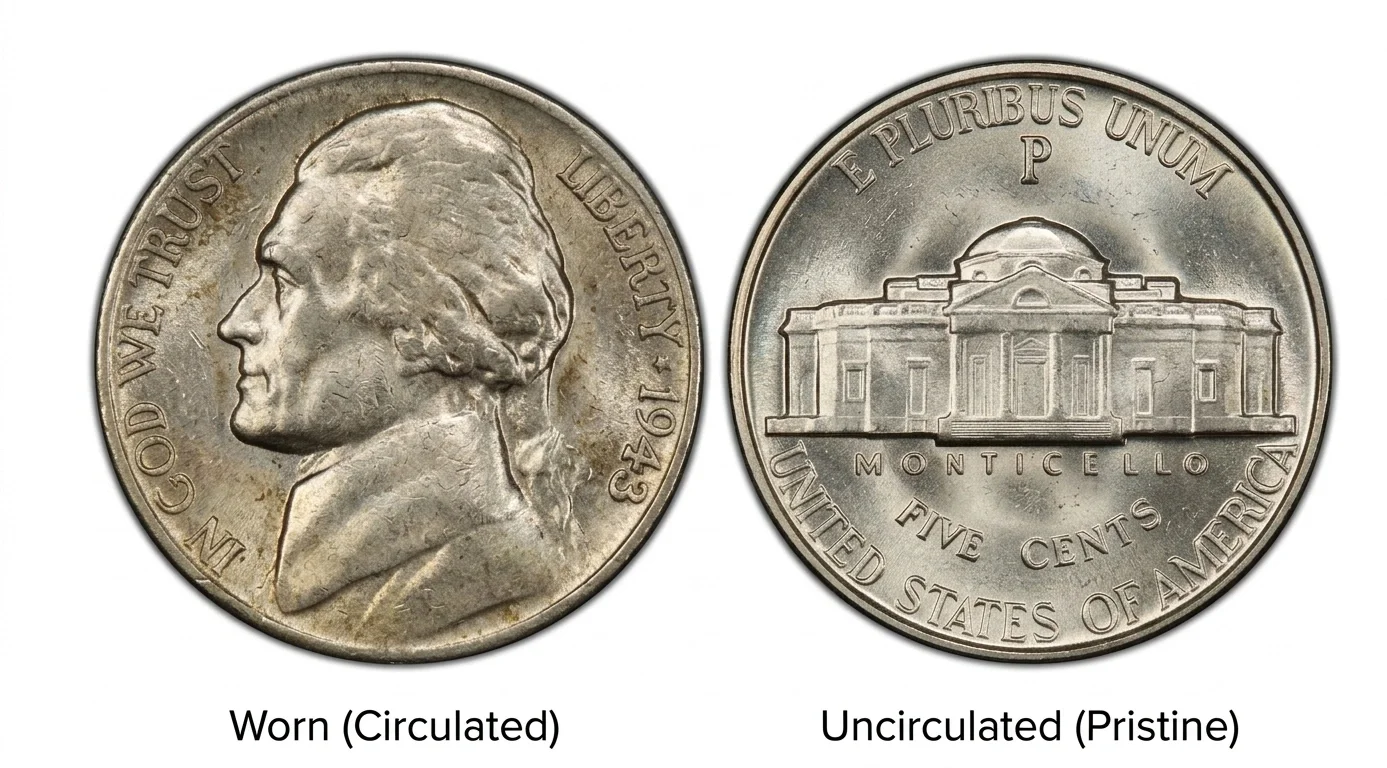
Long-term interest remains fueled by the frequent discovery of new die varieties.
Characteristic | Standard Parameter |
Weight | 5.000 grams |
Diameter | 21.21 mm |
Thickness | 1.95 mm |
Metal Composition | 75% Copper, 25% Nickel |
Edge Type | Plain |
Hardness | Approximately 120 HV |
Using this copper-nickel blend guarantees preservation of design details for 30–40 years of active circulation.
High metal density complicates the striking of fine details as dies become worn.
Statistics of Record Sales and Pricing Anomalies
Market values for coins having confirmed rarity reach millions of dollars at public auctions.
Price dynamics for unique specimens show no direct correlation with stock market indices.
Confirmed prices for landmark positions:
1813 Liberty Head Nickel (Eliasberg specimen): $4,560,000
1918/7-D Buffalo Nickel (MS65): $350,750
1926-S Buffalo Nickel (MS66): $322,000
1913-S Buffalo Nickel Type 2 (MS68): $96,000
Annual price growth for coins graded MS65 has averaged 5.2% over the last decade.
Dropping quality to a VF level reduces the market potential of an asset by 85–90%.
Investors rely on data originating from completed transactions at Heritage and Stack's Bowers auction houses.
Influence of Full Steps Classification on Market Pricing
Identifying Full Steps remains a vital criterion when evaluating strike quality for the Jefferson series.
Presence of five or six crisp steps on the Monticello building indicates perfect pressure from the minting press.
Price comparisons based on step clarity (2026 data):
1953-S Jefferson Nickel
MS65 Condition (No FS): $25
MS65 Condition (with FS): $28,000
Growth driver: Technical difficulty striking the reverse in 1953
1961-D Jefferson Nickel
MS66 Condition (No FS): $15
MS66 Condition (with FS): $8,500
Lack of contact between horizontal step lines deprives a coin of premium status.
Only 0.1% of the total mintage for certain years possesses this specific trait.
Analysis of the 1942–1945 Silver Series
Altering the coin metal during World War II resulted from a shortage of nickel needed for defense industries.
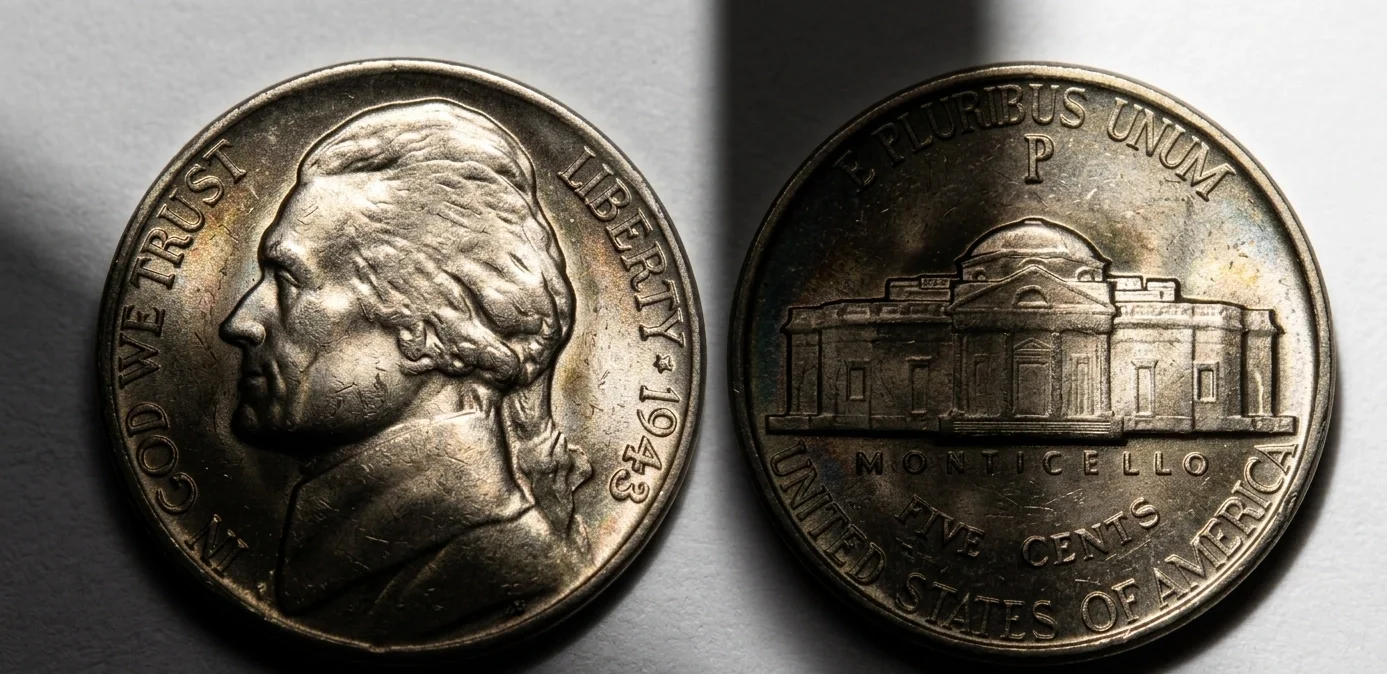
Including silver led to a change in the visual and physical characteristics of these five-cent pieces.
War-time metal composition:
Silver: 35%
Copper: 56%
Manganese: 9%
The weight remained constant at exactly 5.000 grams.
A large mint mark located above the building dome serves as a primary identifying feature.
Market performance for silver nickels (MS67 condition):
1942-P: $750
1943-D: $620
1944-S: $980
1945-P: $550
Developing rainbow toning on the silver surface increases the final hammer price by 40%.
Wear occurs faster on these coins due to the softness of the silver component.
Mechanics of Die Error Formation
Technology failures at the mint create unique objects for numismatic study.
Utilizing damaged tools leads to repeating errors appearing throughout a production run.
Classification and 2026 value of popular errors:
Double Die Obverse (DDO) → Doubling of design elements caused by a misaligned hub strike.
Price for 1939 Jefferson Nickel (DDO): $1,200Repunched Mint Mark (RPM) → Re-application of the mint letter showing a clear offset.
Price for 1942-D (D/D): $800Die Crack → Fractures in the die metal leaving raised lines on the coin surface.
Price depending on size: $5–$150Off-Center Strike → Misalignment of the metal blank relative to the striking mechanism.
50% off-center with visible date: $350
Grease filling the die cavity results in the disappearance of small design details.
Such coins are considered mint errors lacking high numismatic value, and they can be determined with the best coin appraisal app.
Survival Rates of Rare Dates
The quantity of surviving specimens directly impacts long-term collector interest.
Mass melting of older coin types reduces the available market supply.
Estimated survival of Buffalo Nickels (1913-1938):
Total series mintage: Over 1.2 billion units
Survival in MS60 or higher: Less than 2%
Survival of key dates (1926-S, 1921-S): Less than 0.01%
Poor strike quality on the date area of the Buffalo type led to millions of coins losing their identification.
Specimens lacking a date are valued solely by metal weight or as material for folk art.
Restoring a date using chemicals reduces the collector value to zero.
Comparative Investment Return Analysis
Comparing price growth rates of nickel coins against other assets confirms their protective function.
The coin market demonstrates low volatility during the economic fluctuations of 2024–2026.
Period | Gold (Bullion) | Rare Nickels (MS65+) | S&P 500 Index |
2021 | +1.2% | +4.8% | +26.9% |
2022 | -0.3% | +5.5% | -19.4% |
2023 | +13.1% | +6.2% | +24.2% |
2024 | +18.5% | +7.1% | +12.5% |
2025 | +10.2% | +6.8% | +8.1% |
Stable growth at 6–7% annually results from a constant influx of new market participants.
Avoiding sharp price collapses happens because of the physical limit on supply.
The Role of the San Francisco Mint
The San Francisco branch historically produced the lowest mintages for five-cent coins.
Presence of the "S" letter on the reverse traditionally signals increased rarity.
Example mintages from the 1950s:
1950-P (Philadelphia): 9,847,010 units
1950-D (Denver): 2,630,030 units
1951-S (San Francisco): 28,588,000 units (volume exception)
The low 1950-D mintage led to speculators hoarding these coins in large quantities.
Excessive supply of 1950-D in top condition limited 2026 prices to $120.
True rarity stems from a combination of low mintage and high destruction rates in circulation.
Professional Certification Procedures
Using third-party grading services like the coin appraisal app free is a mandatory requirement for high-value transactions.
Professional certification confirms authenticity and determines the exact state of preservation.
Stages of processing in a laboratory:
Visual inspection under a microscope looking for restoration traces.
Assigning a grade based on the 70-point Sheldon scale.
Checking for evidence of chemical cleaning or polishing.
Sealing the coin in a plastic holder (slab).
Service costs for certification range from $25 to $150 per item.
Selling uncertified rare coins involves a discount of 30–40%.
Buyers in 2026 prefer holders featuring QR codes for instant data verification.
Liberty Head Design Typology (1883–1912)
Transitioning from the Shield design to the Liberty portrait marked the beginning of mass popularity for nickels.
Absence of the word CENTS on initial 1883 issues created a fraudulent scheme involving gold-plating.
1883 issue parameters:
Without CENTS: 5.4 million mintage
With CENTS: 16 million mintage
Price for an 1883 "No Cents" specimen in AU58 condition is $45.
Presence of original mint luster increases the price to $200.
Series popularity comes from the ease of completing a full date set.
Surface Conditions and Degradation Factors
The metal surface suffers from environmental exposure when stored improperly.
Formation of dark carbon spots irreversibly lowers the aesthetic appeal.
Price reduction scale for surface defects:
Perfect mirror field: 100% market price
Single contact marks: 85% price
Fingerprint corrosion: 60% price
Scratches from wire brushing: 20% price
Storage in PVC-containing albums causes a green, sticky residue to appear.
Chemical reactions with chlorides destroy the surface layer of the metal.
Using acid-free materials prevents asset degradation.
The 3-Legged Buffalo Nickel Variety
A 1937 error at the Denver Mint became the most famous defect in the history of five-cent pieces.
Excessive polishing of the die resulted in the removal of the buffalo's front leg.
1937-D 3-Legged value based on wear:
VF30 Condition: $600
EF45 Condition: $950
MS63 Condition: $6,500
MS65 Condition: $28,000
Authenticity is determined by a characteristic metal flow on the reverse.
Many fakes exist, created by filing the leg off regular coins.
Absence of a "stream effect" under the animal confirms a fraudulent modification.